Showing posts with label Japan. Show all posts

Sunday, April 30, 2023

Body Language Analysis №4689: Ron DeSantis' Faux Pas and Head Wobbles in Japan - Nonverbal and Emotional Intelligence (Video, Photos, and Analysis)


What follows is a paralanguage, body language, and statement analysis of a portion (0:43–0:52) of the above video of Ron DeSantis’ response to a crucial question asked to him recently in Japan.

*The corresponding descriptions appear below each of the following images.*

After meeting with Japanese Prime Minister, Fumio Kishida on 24 April 2023 in Tokyo, Ron DeSantis was asked, “Governor, polls show you falling behind ah, T, Trump. Any thoughts on that?
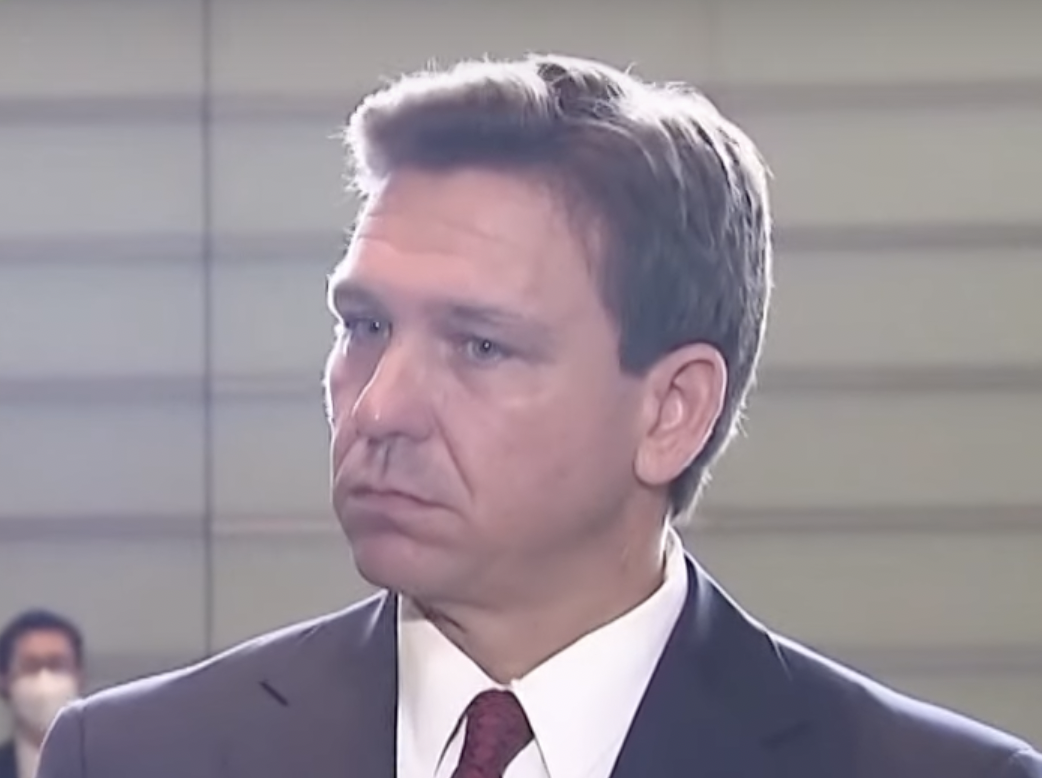
DeSantis immediately looks away from the reporter with his eyes (with his head is still oriented in their direction) as soon as he hears the words, “falling behind” (0:44).

DeSantis then tilts his head/neck backward…

…followed immediately by a hard-swallow (his Adam’s Apple moves up just before he speaks) as he hears the word, “Trump” (0:45).

DeSantis does not have a prominent ‘Adam’s Apple’ (Laryngeal Prominence/Thyroid Cartilage) — so this is somewhat difficult to see on him.

Hard swallows are commonly displayed during moments of anxiety as this helps to stimulate saliva production (in an effort to alleviate the dry mouth of nervousness).

We can also see DeSantis fixate his gaze in the distance (probably on the far wall, above the faces of the audience) with his head/neck rotated more towards his center (relative to his torso).

People will very often refixate their gaze upon a distant/mid-distant inanimate object in order to suppress strong emotions (and the corresponding emotional displays). It’s helpful to think of this micro-behavior as a method of emotional re-centering.

Did you see the expression of Contempt on DeSantis’ face?

Note the prominence of his left nasolabial fold (the natural furrow all humans have that runs diagonally between the lateral aspect of the corner of each mouth to the sides of the nose).

There’s also a subtle tightening of the region above his left upper lip as well as mild flaring of his left nostril — all of these findings clustered are indicative of Contempt.

DeSantis then looks straight (relative to his torso and face) — again in the mid-distance again as he begins a high-frequency, low-amplitude lateral wobbling of his head/neck (note the tightening of his neck muscles). This is a classic Self-Righteous Head Wiggle (AKA a High-Confidence Head Wiggle).

We then hear two successive lip-smacks (the second of which was made by DeSantis as he prepares to answer). Lip smacking is also a sign of high confidence (0:46).

Unfortunately, the video then is edited (between 0:46 and 0:47) as the view switches to a close-up. In this brief interim (and immediately before his answer) we missed crucial nonverbal behavior tells.

After the camera goes to a close-up view, we can see DeSantis continuing and dramatically amplifying his self-Righteous Head Wiggle as says, “I’m not, I’m not a candidate so we’ll see if ah-, if and when that changes.”

The movement of Self-Righteous Head Wiggles are usually fairly rapid (high frequency) and of varying amplitude. Sometimes, it’s extremely short in duration (almost a microexpression) and at other times it lasts longer.

Because this is a dynamic display, please view the video, as the still images do not capture the motion and nuance of this nonverbal behavior.

The Self-Righteous Head Wiggle (SRHW) is typically displayed by individuals who are of relatively high-alpha personalities — but during moments of extra-high confidence (or arrogance) and when they’re expressing particularly strong opinions.

The SRHW can be thought of as a form of nonverbal swagger and often nonverbal arrogance/high confidence. Additionally, the SRHW will sometimes have a superimposed forward head and/or torso movement component when Arrogance and/or Condescension are simultaneous.

The first moment after the camera switches (0:47), DeSantis’ expression is extremely hyperbolic. It’s also profoundly telling that he first dramatizes his face — and holds this expression briefly before speaking.

This exaggerated facial expression of DeSantis actually lasted longer than we see in this video — for it was artificially truncated by the video edit.

Did you notice the sweat on DeSantis’ face, particularly above his upper lip?

Did you notice DeSantis’ mouth asymmetry?

Asymmetrical mouth configuration whilst speaking is an indication of deception, melodrama, braggadocio, and feigned machismo (commonly overlapping behaviors).

Post-match/game interviews of winning strikers, quarterbacks, point guards, etc. — (and politicians) are common scenarios to witness asymmetrical mouth configurations during speaking.

Intriguingly, many actors unknowingly adopt asymmetrical mouth displays while acting, for acting is a special form of lying — lying with consent of the audience.

DeSantis also raises up quickly TWICE on his toes — together with some hand/arm movement this gives the false appearance of a shoulder shrug (please watch the video as these are quick and impossible to discern with simple image capture).

We cannot see his toe-raising directly, as we’re only able to see the upper 20% of his body, but we can infer this based on the relative movements of his chest, shoulders, upper arms, neck, and head.

Elevating up on one’s toes is an indication of an adrenaline surge. This up-on-toe elevation is sometimes a manifestation of excitement and joy — but it’s also commonly seen accompanying anxiety and fear.

Another nonverbal cluster/combination that should jump out at you is Ron DeSantis’ eyes and forehead during his answer. Note while his eyelids are partially closed (versus his resting baseline) the entire width of his forehead is simultaneously contracted.

Thus the upper eyelid muscles are moving in opposite directions (down) versus the immediately adjacent forehead muscles (up). This configuration is highly consistent with deception and/or withheld information (a lie of omission).

Bizarrely, with the second portion of his answer, as he says, “…if ah-, if and when that changes”, DeSantis rotates most of his face, his torso, hips, and his left foot and to a lesser extent, his right foot to his left 90º.

This near full body turn-away and lack of eye contact are secondary manifestations of DeSantis’ extreme emotional discomfort with his lagging poll numbers and his chances for a possible, but of late, significantly diminished odds for a 2024 presidential candidacy.

This is extreme avoidance behavior — and given the nature of this question and his chosen answer, it’s a flashing red light with a blaring siren. It’s also another attempt of DeSantis trying to recenter and suppress his strong emotions.

Notice also, Ron DeSantis’ stuttering. DeSantis has no history of stuttering — so his repetition of “I’m not, I’m not” (“a candidate”) is profoundly telling. DeSantis goes on to say, “… if ah-, if and when that changes”.

Together with his look-away/turn-away these two rapidly stuttered, “I’m not”s — then two “if”s — are glaring alarm bells.

From a body language and statement analysis perspective, DeSantis’ answer screams.

SUMMARY: Based on his body language, paralanguage, and statement analysis of this short but crucial video segment, Ron DeSantis feels strong contempt toward Don Trump and has extreme anxiety about running against the former president.

Ron DeSantis is wavering. While his mind is not yet made-up, he’s strongly considering not entering the 2024 Presidential race.

I’m starting something new — Group Zoom sessions teaching Body Language/Nonverbal Communication. We’ll be meeting the 2nd & 4th Tuesday of each month (90 minutes/session for 1 year, 36 hours total). All those interested, please email me at Jack@BodyLanguageSuccess.com

Ω

This post and other accompanying it, serve as a reference source for the art and science of Body Language/Nonverbal Communication. The views and opinions expressed on this website are those of the author. In an effort to be both practical and academic, many examples from/of varied cultures, politicians, professional athletes, legal cases, public figures, etc., are cited in order to teach and illustrate both the interpretation of others’ body language as well as the projection of one’s own nonverbal skills in many different contexts.

Friday, April 28, 2023

Body Language Analysis №4688: Ron DeSantis and Casey DeSantis meet with the Japanese Prime Minister — Ron’s Low Confidence and Casey’s Dominance


Florida Governor Ron DeSantis met with Japanese Prime Minister, Fumio Kishida on 24 April 2023 in Tokyo. His wife, Casey DeSantis accompanied him. The above image shows the couple just after they had walked through a doorway and in view of some Press.

*The corresponding descriptions appear below each of the following images.*


Note that the couple were holding hands — and Casey DeSantis’ hand is positioned in front.

In about 96% of the time, when male-female couples are holding hands, the man’s hand is positioned front. There are several reasons for this gendered behavioral asymmetry.

Male shoulders are typically rotated slightly inward while female shoulders are usually rotated slightly outward. These anatomical tendencies lend themselves, fairly strongly, for the man’s hand to usually be placed in front.

So when we see a male-female couple holding hands with the woman’s hand in front we know there’s a strong behavioral override factor present — a behavior that outweighs the anatomic tendency for just the opposite.


If we look a second or two prior, we can see that Casey DeSantis initiated this hand holding.

Some men will view themselves as being a protector — thus putting themselves/their hands in front.

Some men will view themself as the dominant person in the relationship — and placing a hand or any body part in front of or on top of their partner is classic dominance behavior.

Overlapping with dominance are the motives of controlling and subordinating others. A hand on top is a method of direct control and subjugation of others (The euphemism, “Gaining an upper hand” is not simply a metaphor).

It’s crucial to point out that simply because a man’s hand is held in front, it does not automatically indicate that he’s the dominant person in the relationship or that he’s a “control freak”.

Moreover, hand holding can be (and usually is) an affection display. And affection is one of the deepest human needs.

However, because of the anatomical bias for a man’s hand to be in front, when we see the woman’s hand consistently in front, we can, with high confidence, know that she is the dominant of the two (which, of course, is independent of affection).

It’s also important to point out that Casey DeSantis’ hand is not always in front when the couple are holding hands. But lately, since Ron DeSantis’ favorability rating has been slipping, this pattern has predominated.

SUMMARY: Casey DeSantis’ hand-holding in front (particularly since she initiated the hand holding) is, with very high probability, an indication of her dominance as well as Ron DeSantis’ lowering confidence and increasing emotional discomfort as his poll numbers fall.

Hey followers, I’m starting something new — group Zoom sessions teaching Body Language/Nonverbal Communication. We’ll be meeting the 2nd and 4th Tuesday of each month (90 minutes per session for 1 year, 36 hours total). All those interested, please email me at Jack@BodyLanguageSuccess.com

Ω

This post and other accompanying it, serve as a reference source for the art and science of Body Language/Nonverbal Communication. The views and opinions expressed on this website are those of the author. In an effort to be both practical and academic, many examples from/of varied cultures, politicians, professional athletes, legal cases, public figures, etc., are cited in order to teach and illustrate both the interpretation of others’ body language as well as the projection of one’s own nonverbal skills in many different contexts.

Saturday, February 11, 2017

Nonverbal Communication Analysis No. 3846: Donald Trump, Shinzō Abe and Handshake Faux Pas - Body Language and Emotional Intelligence (VIDEO, PHOTOS)


Prime Minister Shinzō Abe met with Donald Trump yesterday at the White House. As virtually all World Leaders do, the two men posed for a highly photographed handshake - this one in The Oval Office. It's a safe assumption that the two men also shook hands when they first met earlier that day in relative privacy. Thus it's also probable that at that first meeting only their official government photographers captured that handshake. Such private-first, public-second handshake choreographing is commonplace with heads-of-states visits.

At the very end of this video, Prime Minister Abe turns to his head, and torso to his right, with his eyes turning further - looking up and to his right. This is an example of a "Suppressed Eye Roll". Some have suggested that Abe did this because of the length of the handshake, yet this was not the reason. These longer, hyper-posed, pseudo handshakes for the public are common place when prime ministers and presidents meet. The real cause of the Japanese Prime Minister's expression was because Trump deliberately squeezed his hand quite hard - and he was in pain.

This was a silent scream.


During attempts to suppress strong emotions, such as pain or tears of sadness - forceful eye gaze is a common nonverbal epiphenomenon. This behavior is most commonly seen in a primarily upward direction (photo above shows this direction somewhat), yet it can occur in other directions too (e.g., a slit second later [below] Shinzō Abe's looks directly to his right [away from the source of his pain]).

Although short-lived, it's difficult to overlook the extreme configuration of the Prime Minister's mouth - which, when coupled with the Elevated Central Forehead Contraction - indicates emotional and/or physical pain.


He also rotates his head - and to a lesser degree his torso - away from Donald Trump.


If you carefully listen to the video, you'll here Prime Minister Abe say, "Please - look at me." (0:32 -0:34). A fundamental truth across most all cultures (there are rare exceptions for some superior-subordinate scenarios) is that during handshakes, eye contact is of profound importance. Little or no eye contact projects strong feelings of disrespect.

Trump repeatedly and quickly pulls Shinzō Abe's hand-arm toward his chest with a jerking motion. This body language variant is a default of the President's and is an extremely common narcissistic behavior. It's an attempt to project power and a hyper-alpha status (e.g., "Don't forget I'm stronger than you").


Trump also bent (flexed) his Japanese counterpart's wrist to about a 45 degree angle. Coupled with grip strength, this added another component of pain. It's facilitated by Trump's upward vectoring of their hands (It's not normal for handshakes as well as being disrespectful).

Intriguingly, Mr. Trump immediately verbally outs himself when he says, "Strong hands -" then gesturing the bending motion he had just performed (0:43 - 0:45). Trump knew this had not been a "normal" handshake maneuver and he was aware he had hurt the prime minister (this is akin to a guilty child telling his mother he didn't eat the last cookie before anyone asks).

It cannot be over emphasized that, during a handshake, one should always match the grip strength of the other person. This principle is universal - true across all cultures. Some people have been (very) wrongly taught that a good handshake requires a strong grip - don't make this mistake. Be aware enough, and in the moment enough, so that you match the other person's grip strength. And never try to intimidate the other person by squeezing too tightly.


Trump touches the back of Shinzō Abe's hand toward the end of the lengthy handshake. Their relative positions and the fact that Abe's hand is on top makes a "double-hander" handshake more likely. This maneuver up-regulates Trump's portion of the handshake to a higher alpha status.

Notice this is also performed via a patting motion rather than with constant contact. While I would not recommend either form of the double-hander for a person in Trump's specific scenario - the patting motion dynamic projects a particularly patronizing emotional tone (e.g., patting a child on the head).


See also:

Nonverbal Communication Analysis No. 3845: Kellyanne Conway's Commercial for Ivanka Trump

Nonverbal Communication Analysis No. 3842: Bill Belichick and Julian Edelman

Nonverbal Communication Analysis No. 3840: Donald Trump regarding Vladimir Putin: 'We've Got A Lot of Killers. Do You Think Our Country Is So Innocent?

Nonverbal Communication Analysis No. 3829: Mary Tyler Moore - Flirtatious, Sexy, Alpha Female Smile

Nonverbal Communication Analysis No. 3799: Carrie Fisher and Princess Leia - Full Lips and Lip Pursing

Nonverbal Communication Analysis No. 3711: Vin Scully calls Kirk Gibson's legendary walk-off homer during Game 1 of the 1988 World Series

Nonverbal Communication Analysis No. 3659: Ryan Lochte's "Today Show" Interview regarding Alleged Rio Robbery

Nonverbal Communication Analysis No. 3594: Vladimir Putin, Donald Trump and Fareed Zakaria


_____________________________________________________________________________________

Monday, November 10, 2014

Nonverbal Communication Analysis No. 3008: President Xi Jinping of China and Prime Minister Shinzō Abe of Japan Meet in Beijing (PHOTOS)


President Xi Jinping of China and Prime Minister Shinzō Abe of Japan held a short meeting today in Beijing. In the image above both men - but Xi Jinping in particular, are turning towards photographers. When World leaders meet, handshakes are contextualized differently compared with almost all other scenarios - yet any rapport garnered, via a handshake or otherwise is rarely more important. Facing the eyes, head, torso or lower body away from the other person and towards a camera in the midst of a handshake is profoundly disrespectful. Far too little emphasis and attention are placed on the interpersonal aspects of most all meetings - as if human beings were made of only fact and logic.

If we look at President Xi Jinping's face in the image above, the primary emotion he is displaying is that of disgust - while Prime Minister Shinzō Abe is expressing regret (can you discern these nonverbal components?)


In this second image which took place a few seconds earlier, we see Xi Jinping leaning considerably  backwards during the initial seconds of a handshake - when he and Shinzō Abe - should be leaning slightly forward. This is also a rapport destroying configuration - betraying Xi Jinping's hesitancy, disrespect and relative non-engagement in the moment and for diplomacy with Abe and/or Japan.

See also:

Nonverbal Communication Analysis No. 3007: Man Flags Down Reporter, Confesses to Shooting, Carjacks Reporter's Vehicle, then Crashes it into a Gasoline Tank - Smiling Out of Context

Nonverbal Communication Analysis No. 2616: John Kennedy and Richard Nixon Handshake at Kennedy Inaugural Address, One Body Language Maneuver to Counter a Dominance

Nonverbal Communication Analysis # 1874:  Mitt Romney's Bad Handshake - Political Prevalence 

Nonverbal Communication Analysis No. 2511:  Barack Obama & Vladimir Putin  Handshake at 2013 G20 Meeting

Negotiation Secret # 703: Bad Handshake?  Let me count the ways!

Nonverbal Communication Analysis # 2306:  George W. Bush trapped in Room -  Body Language's Microexpression of Fear

Nonverbal Communication Analysis # 2032:  Hillary Clinton in Paris -  Building a Coalition Against Syrian President al-Assad

_________________________________________________________________________________

Friday, October 1, 2010

Confidence Secret # 33: Covering the Mouth While Smiling


Actor Keanu Reeves is covering his mouth here while he is laughing.  While in some cultures it is considered proper etiquette to do this, such as women in Japan, in the vast majority of the world this is a sign of embarrassment. Although Mr. Reeves obviously finds something funny - part of his psyche does not want to fully and openly express it. 

_______________________________________________________________________________________